This Prague Church Is Where the Santa Story Really Begins
Saint Nicholas Church
You’re walking through Malá Strana, probably on your way to the Castle, maybe already a bit tired — and then this huge green dome just appears in front of you. You stop without really planning to.
That’s Saint Nicholas Church.
At first glance it’s easy to think: okay, another big Prague church. Fair. There are a lot of them.
But this one doesn’t try to be subtle. It’s big, loud, and a bit over the top — on purpose.
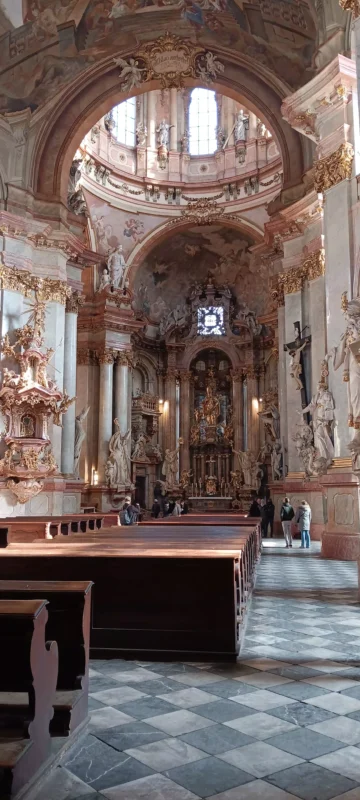
Malá Strana was where nobles, diplomats and wealthy families lived, right under the Castle. So when the Jesuits built their main church here, modesty wasn’t on the list. This was Baroque at full volume: curved walls, massive space, gold everywhere, no empty corners.
The church was designed by Christoph and Kilian Ignaz Dientzenhofer, a father-and-son team who clearly didn’t like straight lines. Almost nothing here feels flat or still. Construction started in 1704 and went on for decades, which explains the insane level of detail.
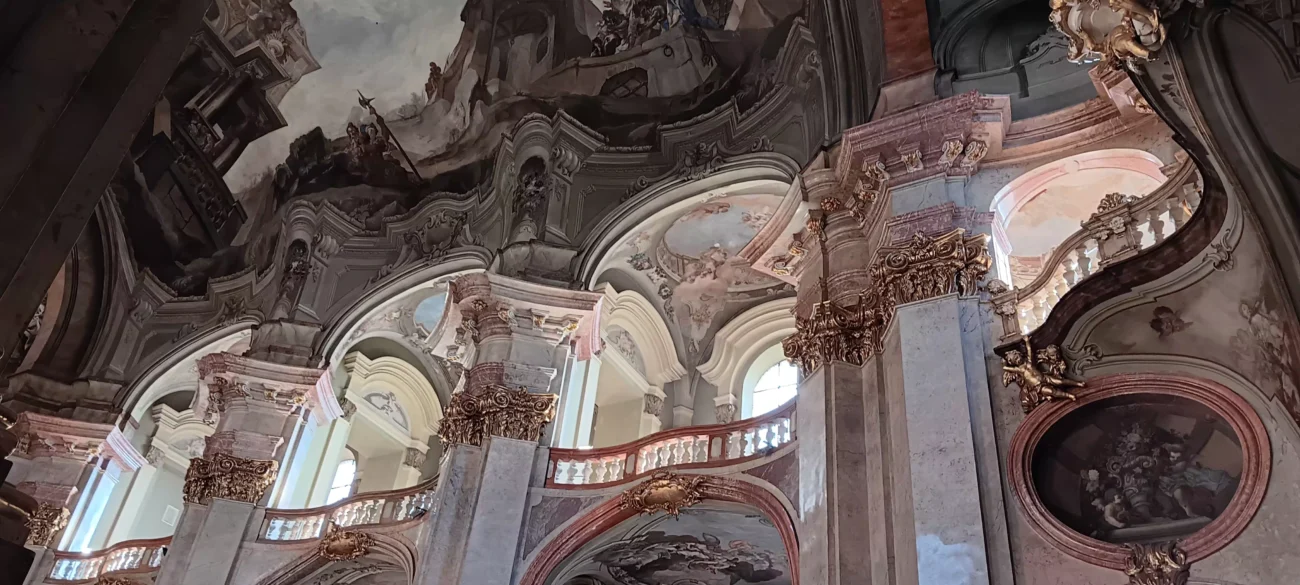
Once inside, everyone does the same thing: they look up.
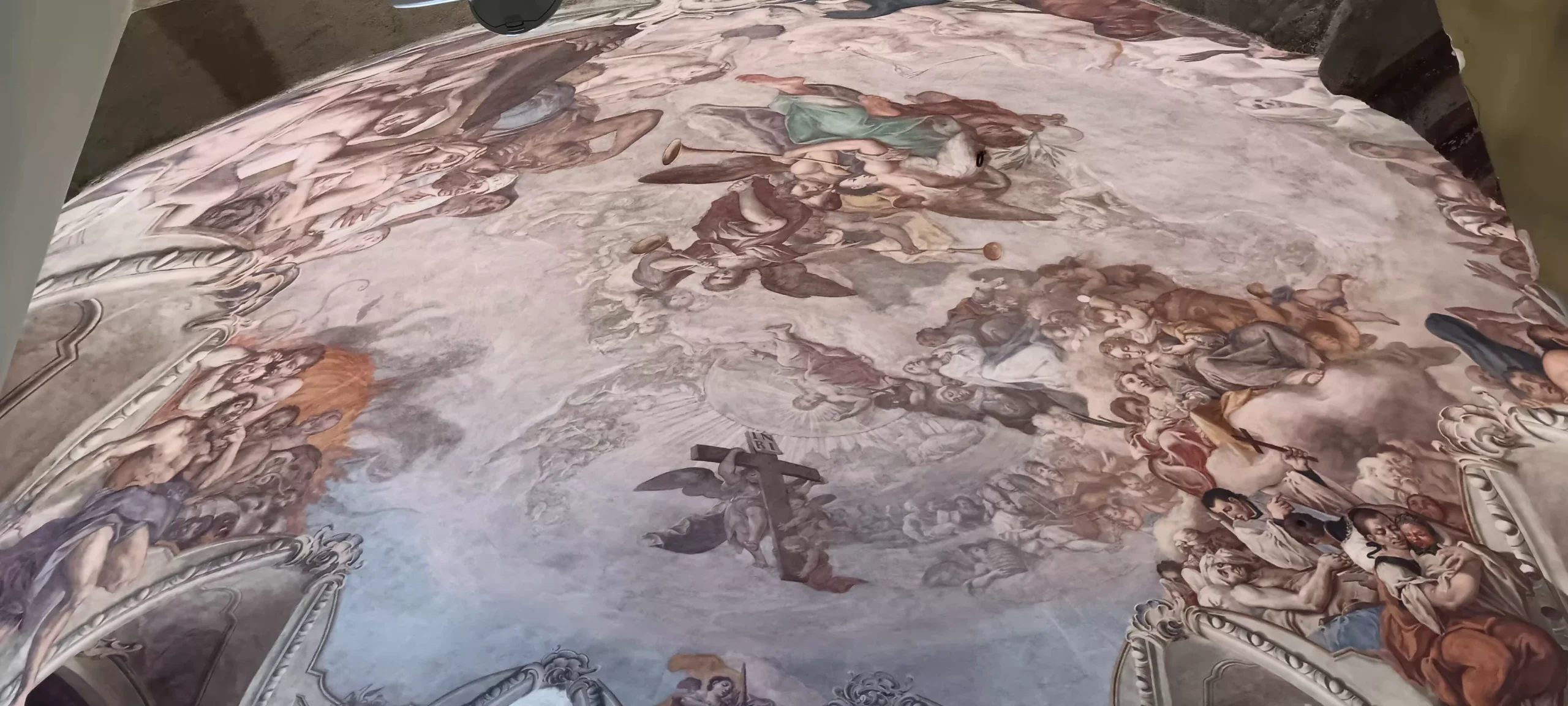
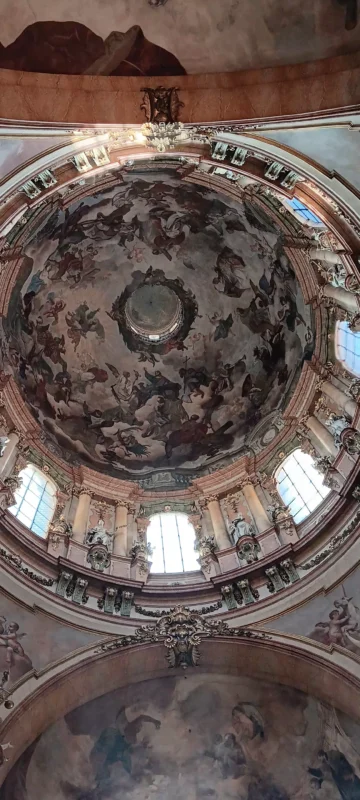
The dome rises about 70 metres, with a huge fresco showing Saint Nicholas being welcomed into heaven. The painting blends so smoothly into the architecture that it’s hard to tell where the real structure ends. That wasn’t an accident — Baroque churches were meant to overwhelm you emotionally, not make you think too hard.
Saint Nicholas – and why Saint Nicholas church is quietly connected to Santa
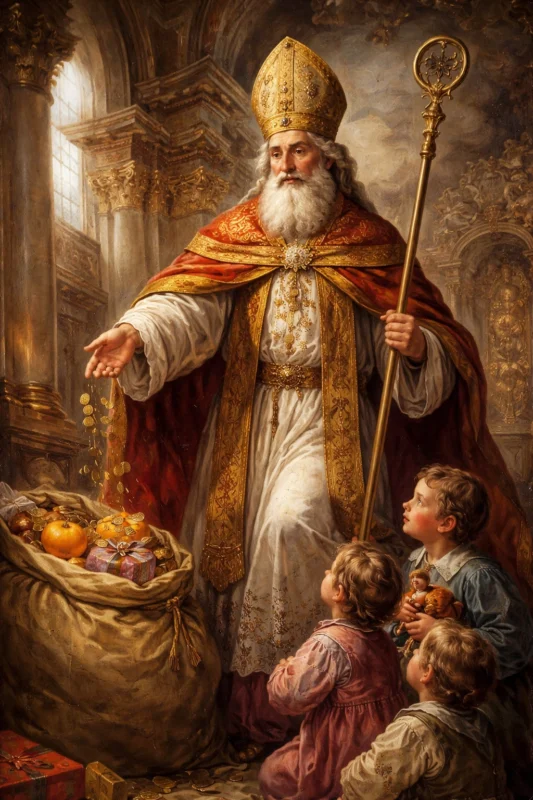
Saint Nicholas wasn’t a symbol or a legend. He was a real person — a 4th-century bishop known for one thing: secretly helping people. He gave money to the poor, protected children, and never took credit.
One famous story says he threw bags of gold through a window at night to save a poor family. The gold supposedly landed in stockings left out to dry.
Yes — that’s where the whole stockings and secret gifts tradition comes from.
Over time, the story spread across Europe. His name changed — Sinterklaas, later Santa Claus — but the idea stayed the same: giving quietly, without applause.
So when you’re standing in Saint Nicholas church, you’re technically standing in one of the closest things to Santa’s original home.
Not the commercial version — the original
Mozart, spies, and power moves
Some of the stories connected to Saint Nicholas church sound made up, but aren’t.
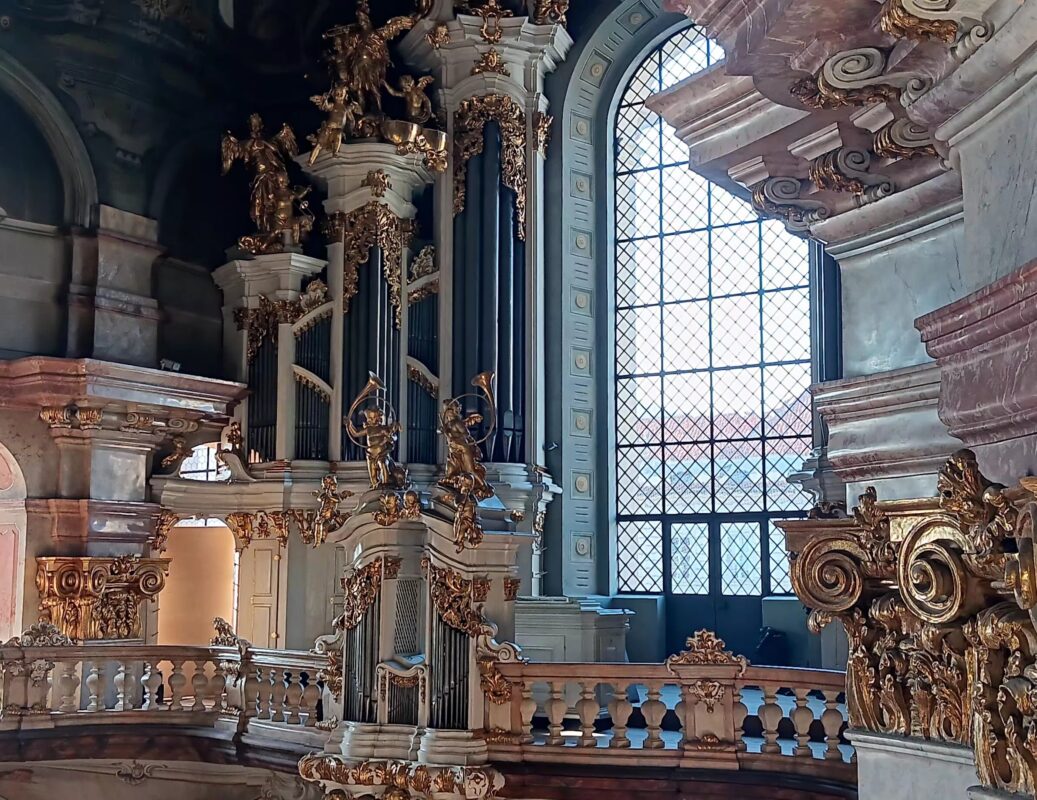
Wolfgang Amadeus Mozart played the organ here in 1787 while he was in Prague for the premiere of Don Giovanni. The same organ is still here, still used, with over 4,000 pipes.
There’s also a massive crystal chandelier hanging inside — a gift from Nicholas I of Russia. Churches weren’t just religious spaces; they were political statements. Big gift = big message.
Outside, the bell tower looks harmless enough. During Communism, it was used by secret police to monitor nearby embassies. Today, you can climb it, see the old surveillance room, and then step out onto one of the best viewpoints in Prague — with views of Charles Bridge, Prague Castle and the city’s red rooftops.
Don’t rush it
This isn’t a five-minute stop. If you rush through, you’ll miss the details that make the place work — the pulpit, the acoustics, the way light moves through the space.
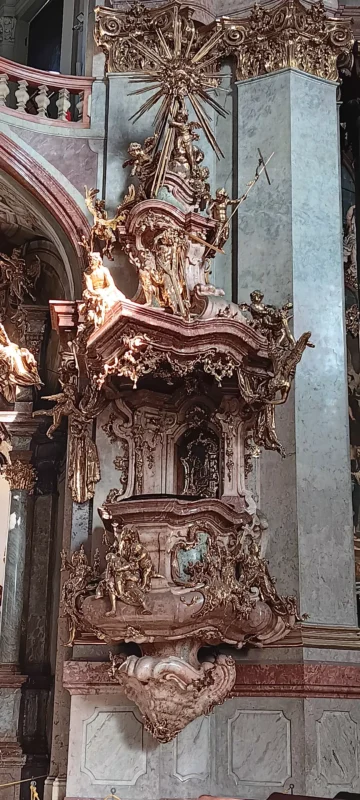
It’s great for photos, especially with a wide lens, but even without a camera, it’s worth slowing down.
And honestly, this is exactly the kind of place where Prague starts making more sense — when you stop seeing it as “nice buildings” and start noticing the stories behind them.
That’s also what we focus on during our tours at Bohemian Alternative Tours. Not just dates and names, but the little connections, odd details, and stories that most people walk past without noticing.
Saint Nicholas Church isn’t quiet or minimalist. It’s confident, dramatic, and completely unapologetic.
Very Prague.
And even if you’re “not really into churches”, this is still one I’d happily bring you to — because once you know what you’re looking at, Prague becomes a much more interesting city.
